
Formula 1 has become one of the fastest growing sports and one having the largest impact on the environment. From gas burning cars, to large crowds of up to half a million spectators per week and transportation of full race teams to different countries and cities almost weekly during race season.
The end result is that they burn through roughly 256,000 tons of carbon a season. The sport has taken a serious look at itself and has implemented a Net-Zero 2030 policy to preserve and address its sustainable future.
Utilizing sustainable fuels and hybrid engines are easy targets and on the top of the list to reduce the demand on natural resources. To achieve these goals Formula 1 has looked at all aspects of its operations and race technologies.Due to the growing popularity of Formula 1, there is a need to add more racing venues in cities like Las Vegas, Miami, Dubai and elsewhere.
Being environmentally responsible is a big component to the viability of the sport. New locations utilize existing city infrastructure to fill the need on race week, utilizing existing architecture infrastructure and temporary builds that leave a lighter footprint than permanent, dedicated facilities which allows them to return that space back to the communities when the race week is over.
Key Takeaways
- Net zero by 2030 is F1’s target, from factory to flag.
- Logistics drive 45% of the sport’s footprint; facilities add another 19%.
- Street circuits reuse existing roads instead of tracks that sit empty most of the year.
- Architects shape the venues, so many of the sustainability wins run through design.
Countdown to Zero: F1’s Five-Part Plan
F1 splits its net-zero push into clear lanes. On the track, hybrid power units already squeeze more power from less fuel than any road car, and the sport is moving them onto fully sustainable fuel. Getting equipment between 21-plus races drives 45% of emissions, so leaner logistics and travel come next. At its offices and factories, F1 is switching to 100% renewable power, the source of another 19% of its carbon. Whatever’s left gets balanced to zero through verified carbon capture. Only a fraction of the total, 0.7%, actually comes from the cars.
Street Circuits as Sustainable Architectural Infrastructure
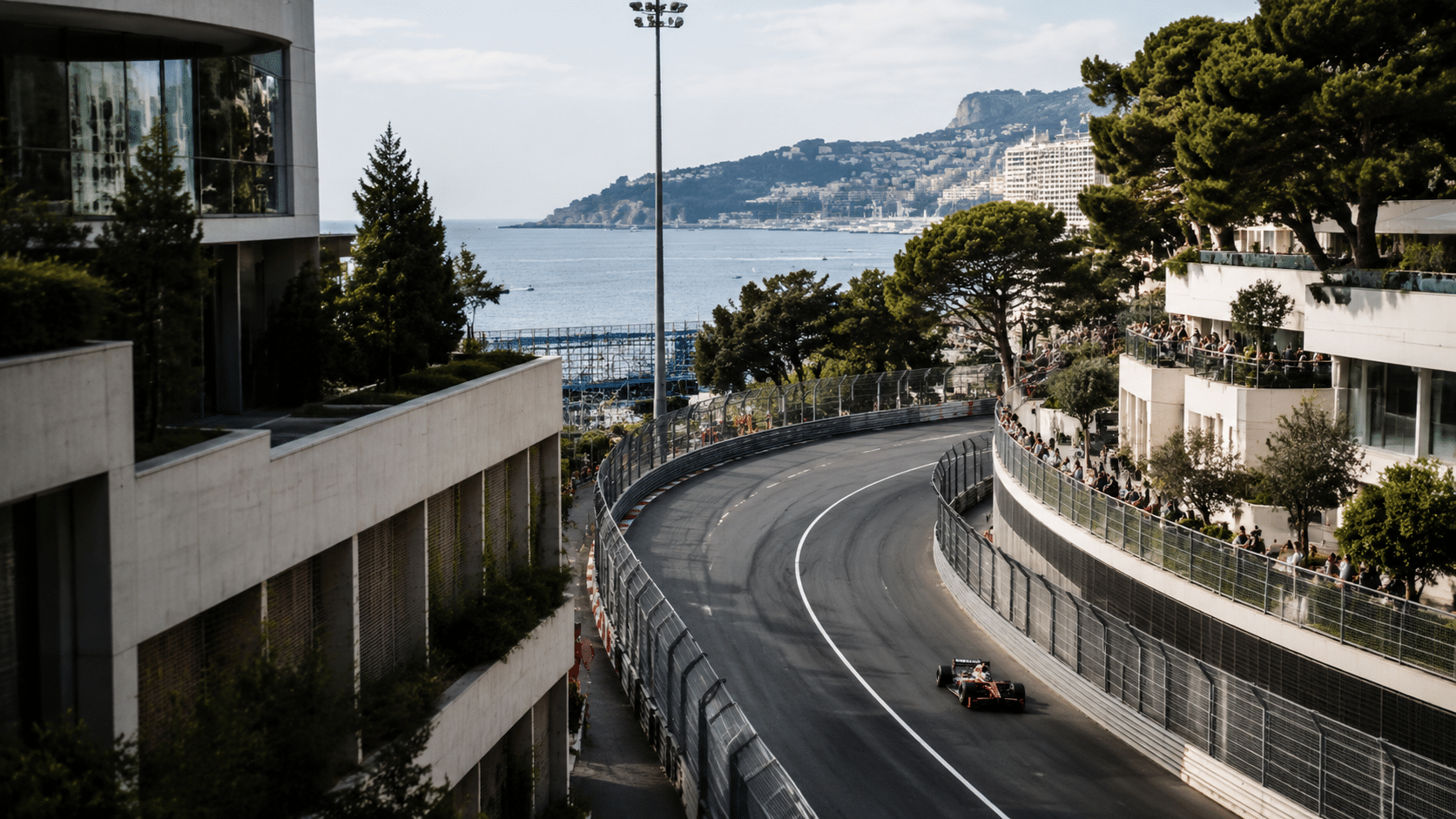
The venue is where architecture meets the checkered flag. Rather than pour concrete for a track used a few weekends a year, cities like Monaco, Las Vegas, and Singapore hand over roads they already have. Those temporary builds are real engineering. Monaco stacks its paddocks three stories high, like condominiums, because the harbor leaves no room to spread out. Las Vegas went further and built permanent paddocks to cut the annual setup. Grandstands for crowds of 100,000 go up, come down, and get stored, all while meeting life-safety codes.
What the City Keeps After the Race
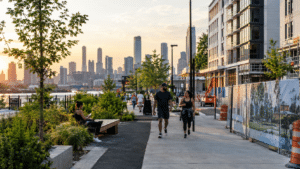
Temporary doesn’t have to mean throwaway. A well-planned circuit can leave behind resurfaced roads, upgraded utilities, and public spaces the neighborhood uses every day. That’s the opposite of the Olympic and World Cup venues that decay into ghost towns once the event moves on. The design question is the one we ask on every project: what does the community inherit when the crowds are gone? Reuse beats rebuild, whether the site hosts a race weekend or sits vacant like an empty big box store.
Cross Your Own Finish Line
Change is rarely easy, but F1 is proving that real sustainability is achievable with a clear plan and defined goals. The finish line is in sight. 🏁
Our team at Guzzo Architects would love to hear your feedback and help you on your own sustainability journey. Call us at 201-939-1446 to start a conversation about your project.
FAQs
When will Formula 1 reach net zero?
F1 has committed to a net-zero carbon footprint by 2030, covering everything from its factories to race day, and to making every race a sustainable spectacle by 2025.
Do street circuits really cut carbon?
They reduce build waste and land use by racing on existing roads. The bigger footprint sits in logistics, which is why F1 targets how teams and gear move between events.
What can building owners learn from F1?
Design for more than one use. Sustainable architectural infrastructure earns its cost by serving daily life, not just a single event, whether it’s a circuit or a mixed-use development.